

Foundations in Restorative Practices Program
We all long for safer, healthier, and more equitable environments, but struggle to find effective methods to achieve them. Current approaches to problem-solving often leave us feeling disconnected and unsatisfied. We need a way to heal, restore, and build strong communities.
In today’s world, conflict and division may seem to be the norm. It’s heartbreaking to witness the harm caused by adversarial systems, the breakdown of relationships, and the lack of accountability.
That’s why Restorative Justice Project Maine is here to guide you with the Restorative Practices Program. Through the program, you’ll immerse yourself in the power of restorative practices, deeply rooted in indigenous peacemaking traditions. You’ll also learn practical tools for conflict resolution and develop a profound understanding of restorative philosophy.
Bridging Connections with Restorative Practices
Offered through the University of Maine Division of Lifelong Learning and delivered by RJP Maine, this program is designed to shift your thinking from How do I show up and sit with people? to How do I invite everyone’s input? and, ultimately, How do I communicate with people?
By embracing restorative practices, you can create a positive ripple effect in your organization and community. Together, we can build a world where connections are nurtured, harm is repaired, and relationships are restored. With growth, change, and connection, we can honor the diverse traditions of global indigenous communities and preserve their legacy with humility and respect.

The Power of Restorative Practices in Building Resilient Communities
Whether you’re an educator, a social service worker, or involved in the legal system, restorative practices can revolutionize how you interact with people and hold power. Rather than experiencing resistance, avoidance, or relying on punitive interventions, the systematic use of restorative practices leads to positive, resilient, and accountable communities.
Restorative practices can also help build healthy communities, increase social connection, decrease crime and antisocial behavior, repair harm, and restore relationships. These practices have deep roots in peacemaking and knowledge, honoring the long-standing history of global communities living in alignment with what we now refer to as restorative justice and restorative practices.

Training Details
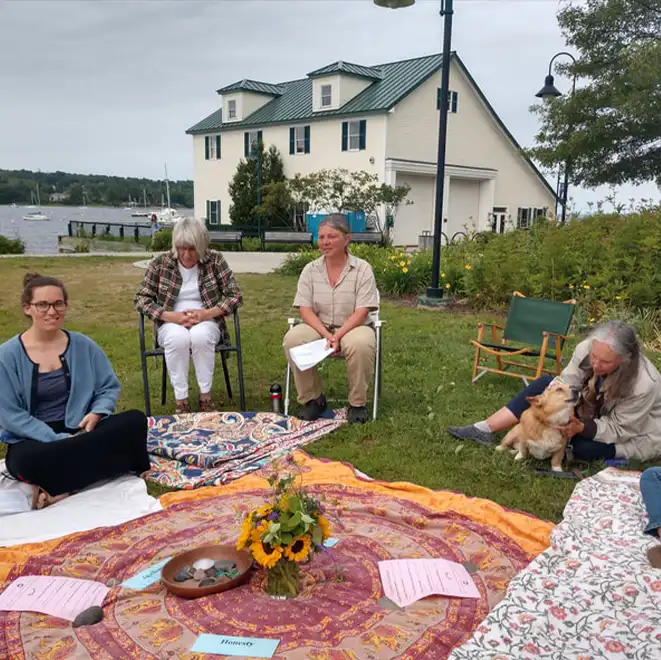
Over the course of 6 days, spread across 4 months, you’ll be part of a supportive learning group that explores the philosophy behind restorative practices. Through discussions, exercises, and other practical activities, you’ll deepen your understanding and gain techniques to build strong, connected cultures.
When conflict occurs, you’ll have non-adversarial problem-solving tools at your disposal to reach solutions that build safer, healthier, more equitable environments. You’ll learn firsthand from people and organizations already using restorative practices in their everyday lives and work.
Key Learning Outcomes
By the end of the program, you’ll have a firm grasp of:
- What it means for something to be restorative
- What it feels like to be in connection with one another in humanity
Respect for Indigenous Roots
Restorative practices have deep roots in indigenous peacemaking and knowledge. We honor the diverse traditions of global indigenous communities and remain humble, knowing that these practices came before us and will outlast us.
Embracing Restorative Practices
Restorative practices aren’t just a tool for conflict resolution — they’re a way of life, a philosophy that can transform your interactions and relationships. We invite you to join us on this fulfilling journey of growth and change, to not just learn about restorative practices, but to embody them.
For more information or to register for the Foundations in Restorative Practices Program, please visit the University of Maine’s Division of Lifelong Learning: Foundations in Restorative Practices Program.